

Increasing food availability.
We’re working with farmers and supporting school gardens to increase food availability during the seasonal hunger.
Food is difficult to find during the hunger season.
When no one has money, growers don’t produce food. We are changing that dynamic by encouraging additional food production just prior to the growing season.

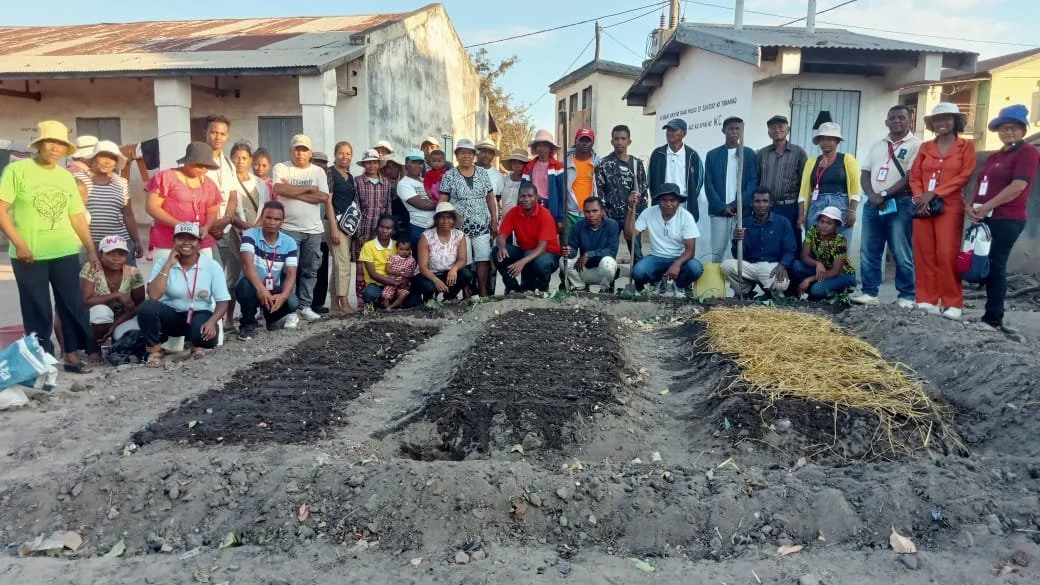
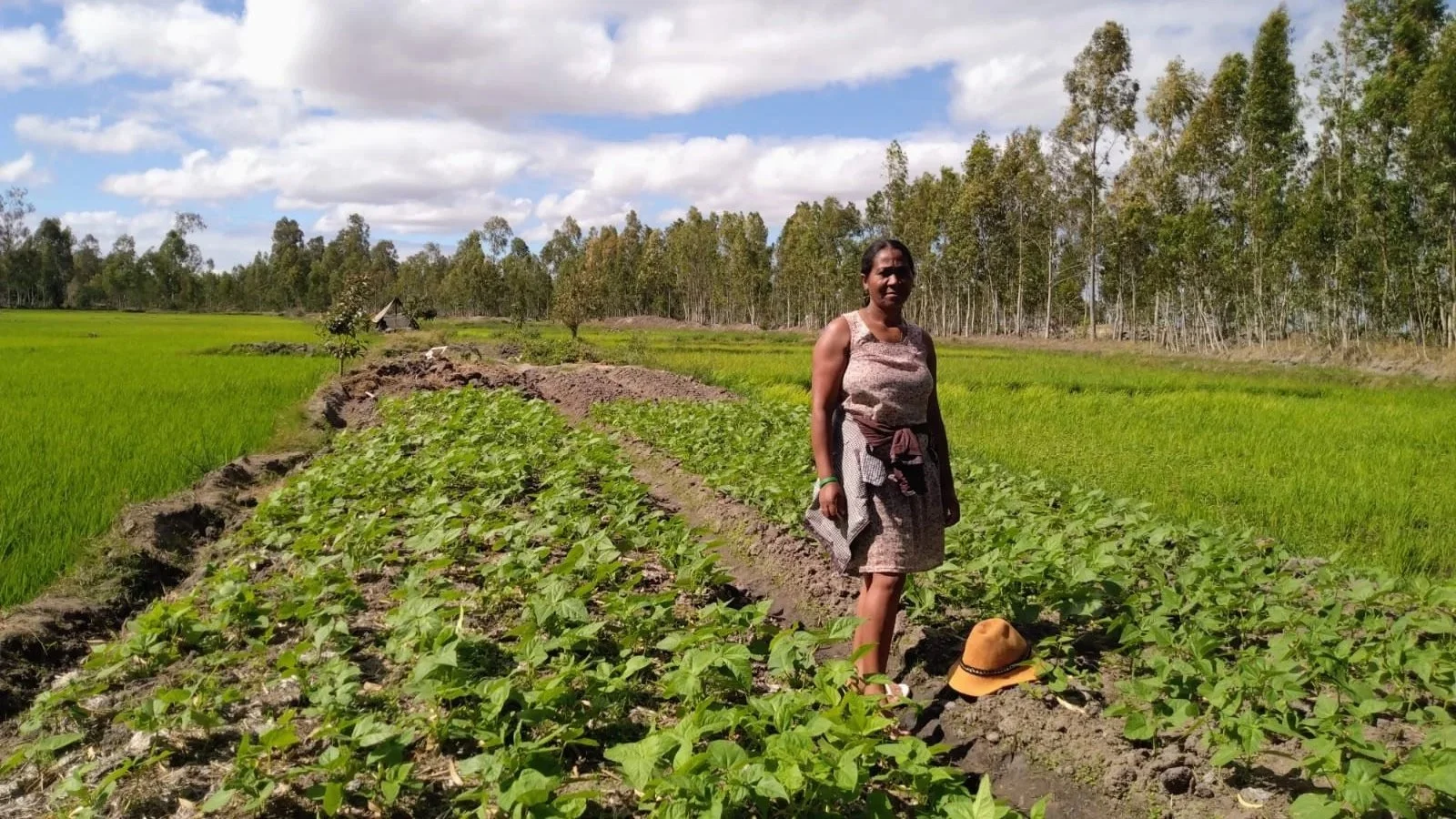
Working with local farmers.
Seed and training, not handouts
In 2026 the Growers Program worked with 153 farmers across our eight partner villages, more than half of them women, many of them mothers of children who eat at the canteens. The program costs about $3,500 a season.
The seed is open-pollinated, never hybrid
That was the farmers’ choice, not ours. Hybrid seed has to be bought again every year, and the growers here were clear that they did not want to depend on a seed company. Open-pollinated seed can be saved and replanted, so a farmer selecting from their best plants each season becomes less dependent on any outside supplier — including us.
Eleven crops
Corn, beans, peanuts and voanjobory, the Bambara groundnut, alongside pumpkin, eggplant, zucchini, carrots, onions, garlic and greens. Three are legumes.
Eggplant and zucchini are there for a particular reason: they are the vegetables Chef Rolland teaches the parent cooks to make into tempura, so the growers plant what the kitchens have been trained to cook.
Our growers produce vegetables in addition to the rice they already grow each season. The same households tend both crops.
We buy at market price
Not below it. A guaranteed buyer paying the going rate is a customer rather than a captive arrangement, and it means the money stays in the village during the months when least of it is circulating.
Training comes before the seed
Each October, a trained agronomic staff advisor delivers advanced gardening courses in the villages — before any seed is distributed. Regional Inspector Mahefa Todisoa then visits each farmer’s field to assess what will grow there, so what a grower receives matches their ground. Distribution runs November to January, staggered crop by crop, because each takes 70 to 90 days from planting to harvest and every one is timed backwards from the date the kitchens need it.
The loop closes in every village
The women who grow the food are the mothers of the children who eat it. The committee plans the menus, Mahefa works back from those menus to the planting schedule, and the harvest arrives for the kitchen that planned for it.
What we measure, and what we don’t
We keep per-farmer records by name and quantity for every seed distribution. Those are inputs going out, not harvests coming back — we do not yet measure yields or household income.
What we have set for ourselves is a target: the Growers Program should supply at least 5% of what the canteens buy, by value, and rise from there. Against a $52,000 season food budget that is about $2,600 going back into local communities when it’s needed most.

“By supporting school garden programs, we both increase the availability of food and teach our children to support themselves”
— Mr. Theodore, Head of School Lunches, Alaotra-Mangoro
Subscribe to our newsletter
Sign up with your email to receive news and updates.